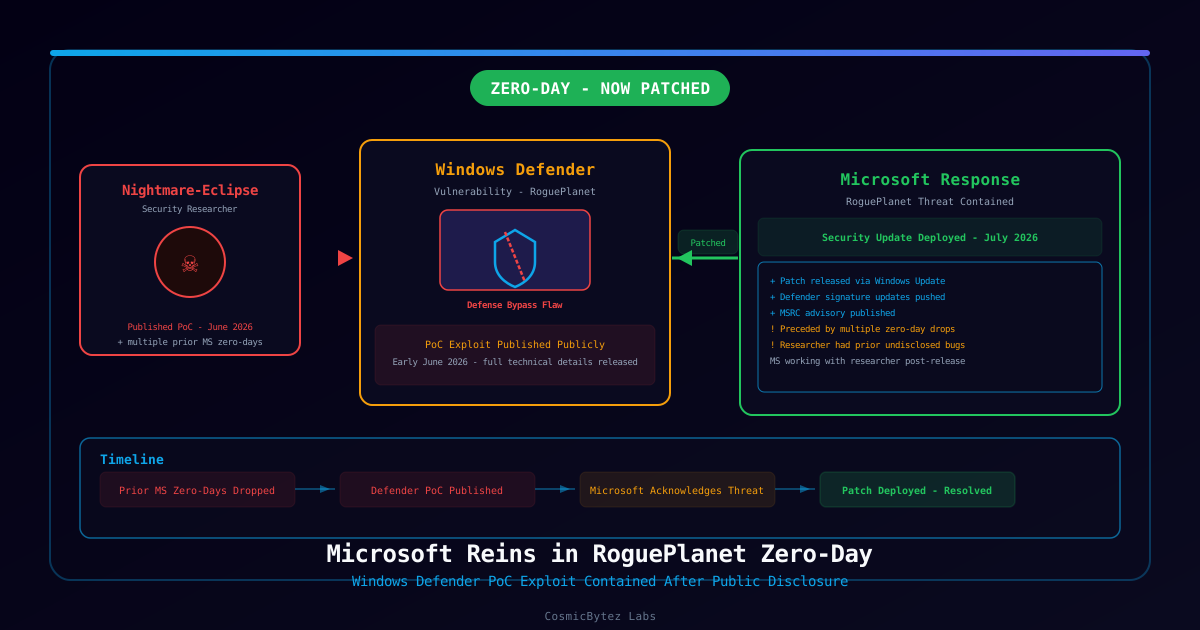
Microsoft has addressed the security vulnerability dubbed RoguePlanet — a Windows Defender zero-day whose proof-of-concept exploit was publicly released by researcher "Nightmare-Eclipse" in early June 2026, following a pattern of high-profile zero-day drops targeting Microsoft's security stack.
The Vulnerability
RoguePlanet is a defense bypass flaw in Windows Defender, Microsoft's built-in endpoint protection product. The vulnerability allows attackers to neutralize Defender's detection and blocking capabilities, effectively rendering the security tool blind to malicious activity on a compromised host.
The specific technical mechanism has not been fully disclosed in public advisories, but the PoC published by Nightmare-Eclipse was described as functional — capable of demonstrating the bypass condition on affected Windows builds.
Nightmare-Eclipse: A Prolific Zero-Day Dropper
The researcher behind this disclosure has established a pattern of releasing Microsoft-targeted zero-day vulnerabilities without coordinated vendor disclosure. Prior to the RoguePlanet PoC in early June 2026, Nightmare-Eclipse had already released several other Microsoft zero-days, putting the company in a reactive posture.
This approach — publishing full technical details and working exploit code before a vendor patch is available — maximizes pressure on vendors to respond quickly, but also hands threat actors a ready-made weapon during the window between PoC publication and patch deployment.
| Release | Target | Timing |
|---|---|---|
| Prior zero-days | Various Microsoft products | Before June 2026 |
| RoguePlanet PoC | Windows Defender | Early June 2026 |
| Microsoft patch | Windows Defender | July 2026 |
Microsoft's Response
Microsoft identified and contained the RoguePlanet threat, deploying a security update through Windows Update that addresses the underlying Defender flaw. The company also pushed updated Defender signature definitions to help detect exploitation attempts in the wild.
Per Microsoft's Security Response Center (MSRC) process, an advisory was published documenting the vulnerability and directing customers to apply the fix.
Recommended Actions
| Action | Priority |
|---|---|
| Apply Windows security updates | Immediate |
| Verify Windows Defender is updated and active | Immediate |
| Review endpoint detection logs for defense bypass indicators | High |
| Enable Microsoft Defender for Endpoint (MDE) for enhanced telemetry | Recommended |
Why This Matters
The Defender Blind Spot
Windows Defender is installed and active by default on all modern Windows systems, making it the primary security control for millions of endpoints — particularly in organizations that rely on built-in Windows security rather than third-party EDR products. A bypass that disables or blinds Defender is highly valuable to ransomware operators, APT groups, and commodity malware distributors.
During the window between the June PoC publication and the July patch, any threat actor could have incorporated the bypass into existing malware toolkits.
The Uncoordinated Disclosure Debate
Nightmare-Eclipse's approach highlights the ongoing tension between:
- Full disclosure advocates — who argue that public pressure is the only reliable mechanism for forcing vendors to act quickly
- Coordinated disclosure advocates — who argue that publishing working exploits before patches exist puts users at unnecessary risk
Microsoft's security teams have generally advocated for coordinated disclosure with a defined timeline (typically 90 days), and the company has been working to understand Nightmare-Eclipse's methodology and motivations following the RoguePlanet disclosure.
Checking Your Exposure
Verify Your Windows Defender Version
# Check Windows Defender version and definition date
Get-MpComputerStatus | Select-Object AMEngineVersion, AMProductVersion, AntivirusSignatureLastUpdated

# Ensure real-time protection is enabled
Get-MpPreference | Select-Object DisableRealtimeMonitoring
# Should return: FalseConfirm Updates are Applied
# Check for pending Windows updates
Get-WindowsUpdate -MicrosoftUpdate

# Force update check via Windows Update Agent
wuauclt /detectnow /updatenowEnterprise: Verify via Intune / SCCM
For enterprise environments, use Microsoft Intune compliance policies or SCCM reports to verify that all endpoints are running the patched Defender version. Filter for devices with Defender AMProductVersion below the patched release.
Key Takeaways
- Patch immediately — The RoguePlanet fix is available via Windows Update as of July 2026
- Windows Defender bypasses are high-value targets — A single working bypass enables malware to operate undetected on millions of systems
- Monitor for exploit activity — Even with the patch deployed, look for indicators of pre-patch exploitation in endpoint logs
- Consider MDE — Organizations relying solely on built-in Defender should evaluate Microsoft Defender for Endpoint for the additional telemetry and cloud-based detection capabilities
References
- Dark Reading — Microsoft Reins in RoguePlanet Zero-Day Threat
- Microsoft Security Response Center
- Microsoft Defender Security Intelligence Updates